Miss Hinchliffe, who led the World Book Day celebrations, said: “World Book Day is about making sure every child can see themselves in a story and access reading in a way that works for them. Whether that’s through pictures, braille, audio, dual language or shared storytelling, every child deserves the chance to experience the joy and imagination that books bring.”
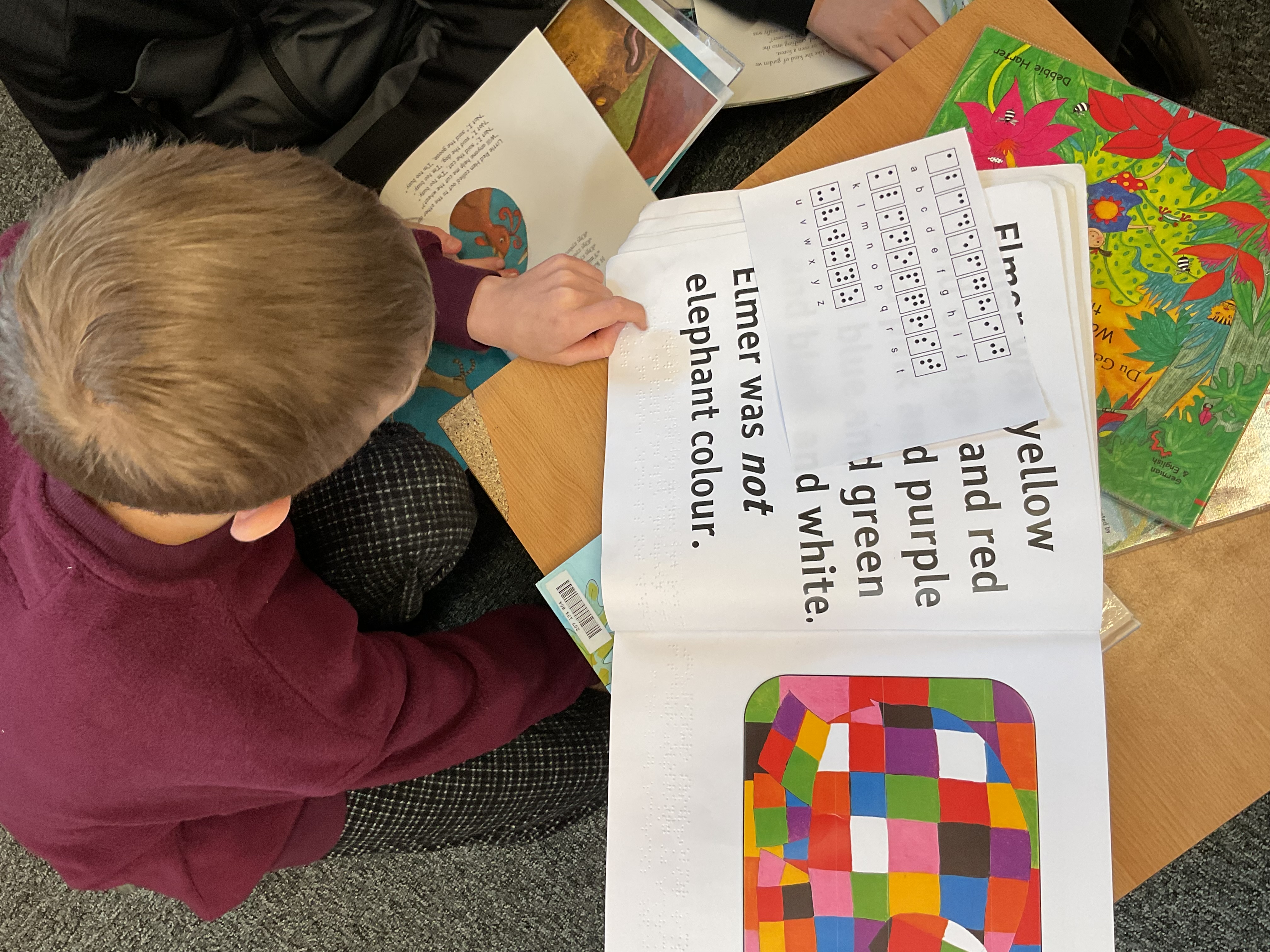
Children explored an exciting selection of accessible texts, including braille and large print books, dual language stories, yellow-paged books, audio books and wordless picture books. The aim was to help pupils understand that reading can be enjoyed by everyone, in many different ways.
Headteacher Mrs Gibson said: “The children were fascinated by the range of books. Many of them had never seen braille before, and it opened brilliant conversations about how people with different needs experience stories.”
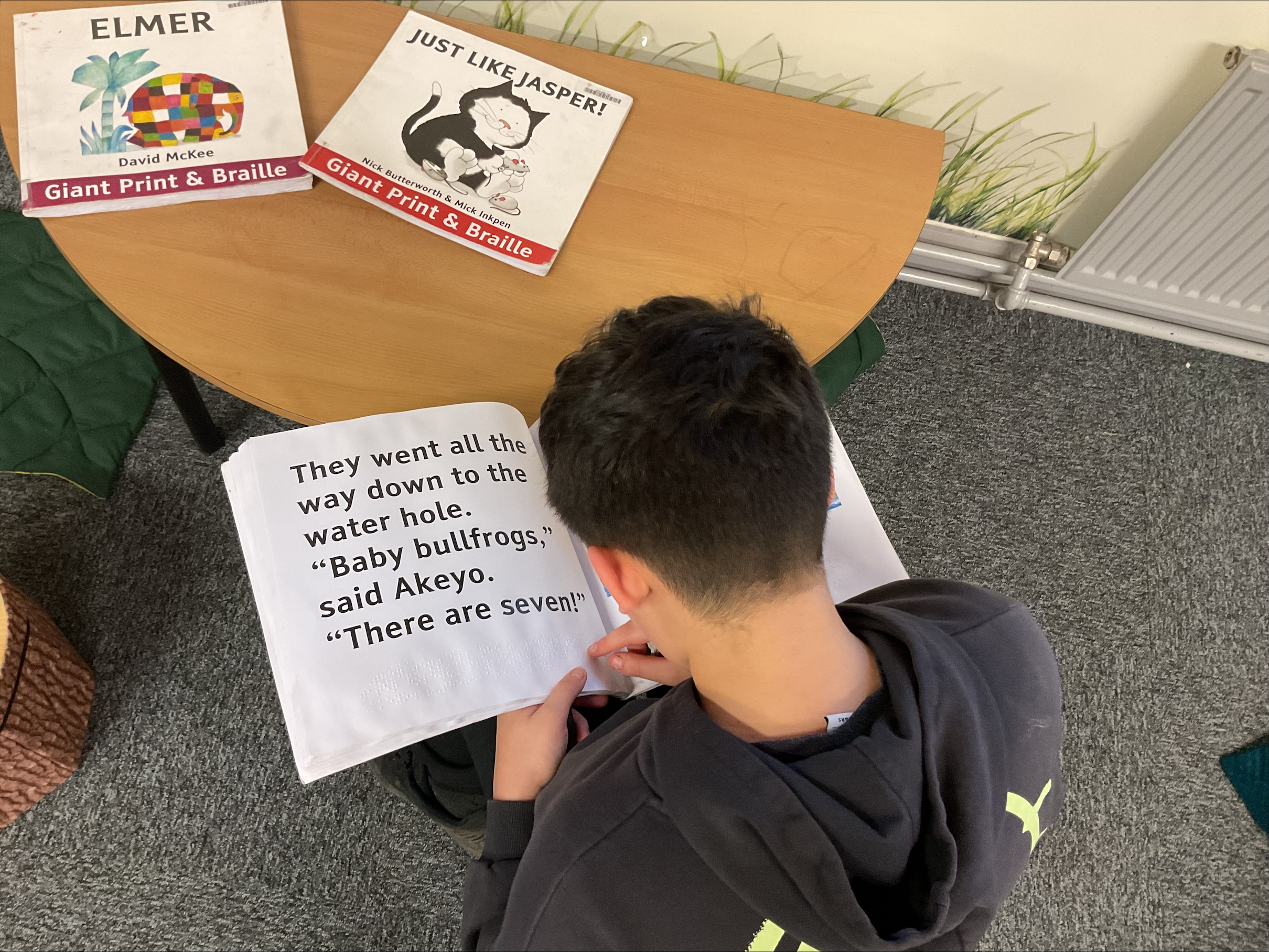
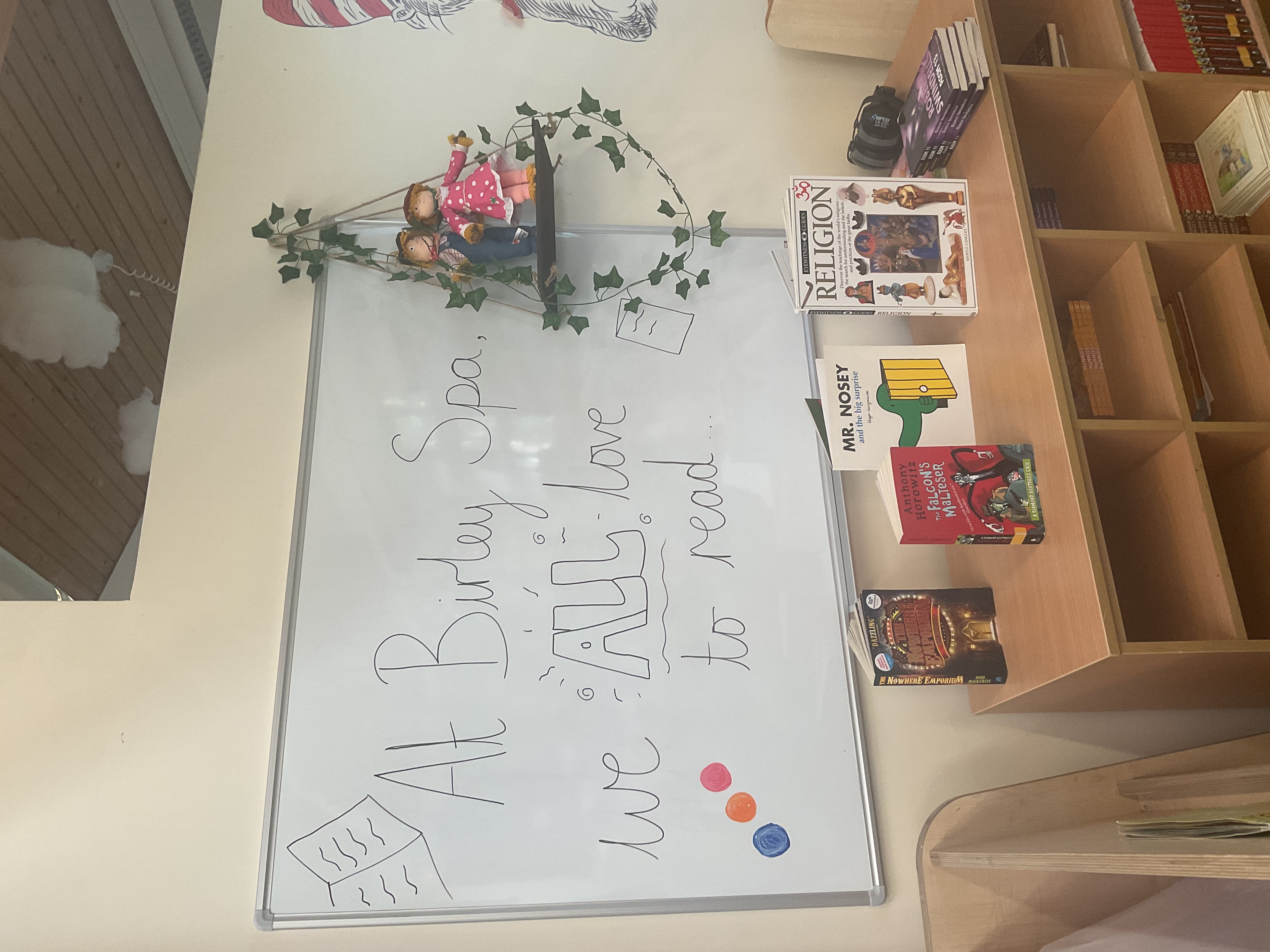
Throughout the morning, classes visited the school library to handle and explore the full range of accessible books. Pupils asked questions, felt braille pages, compared illustrations, and listened to short audio extracts. Here’s what some of our pupils had to say about the visits:
“It was an inclusion activity because, when we explored all the books, we saw books for different people so everyone could enjoy reading.”
“I liked how we learnt how some people use Braille to help in daily life e.g. signs, medication packages and packaging.”
Pupils in Years 4, 5 and 6 also joined the National Literacy Trust’s Booky and Footy Quiz, adding a fun, competitive element to the day.
“The World Book Day Footy and Book Quiz was my favourite. Some questions were about famous footballers and some were about stories. It was tricky but fun, and I liked working with my team.”
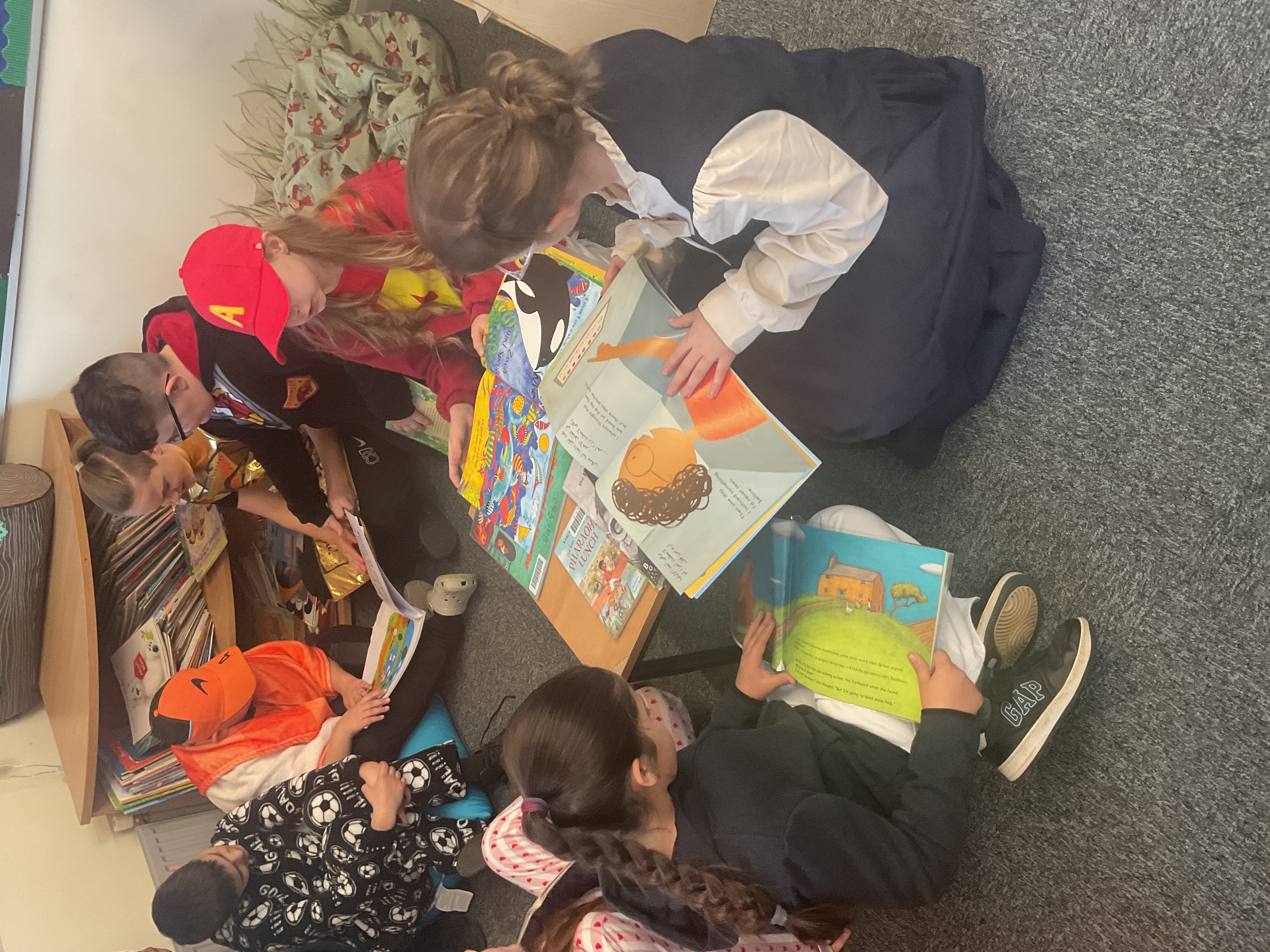
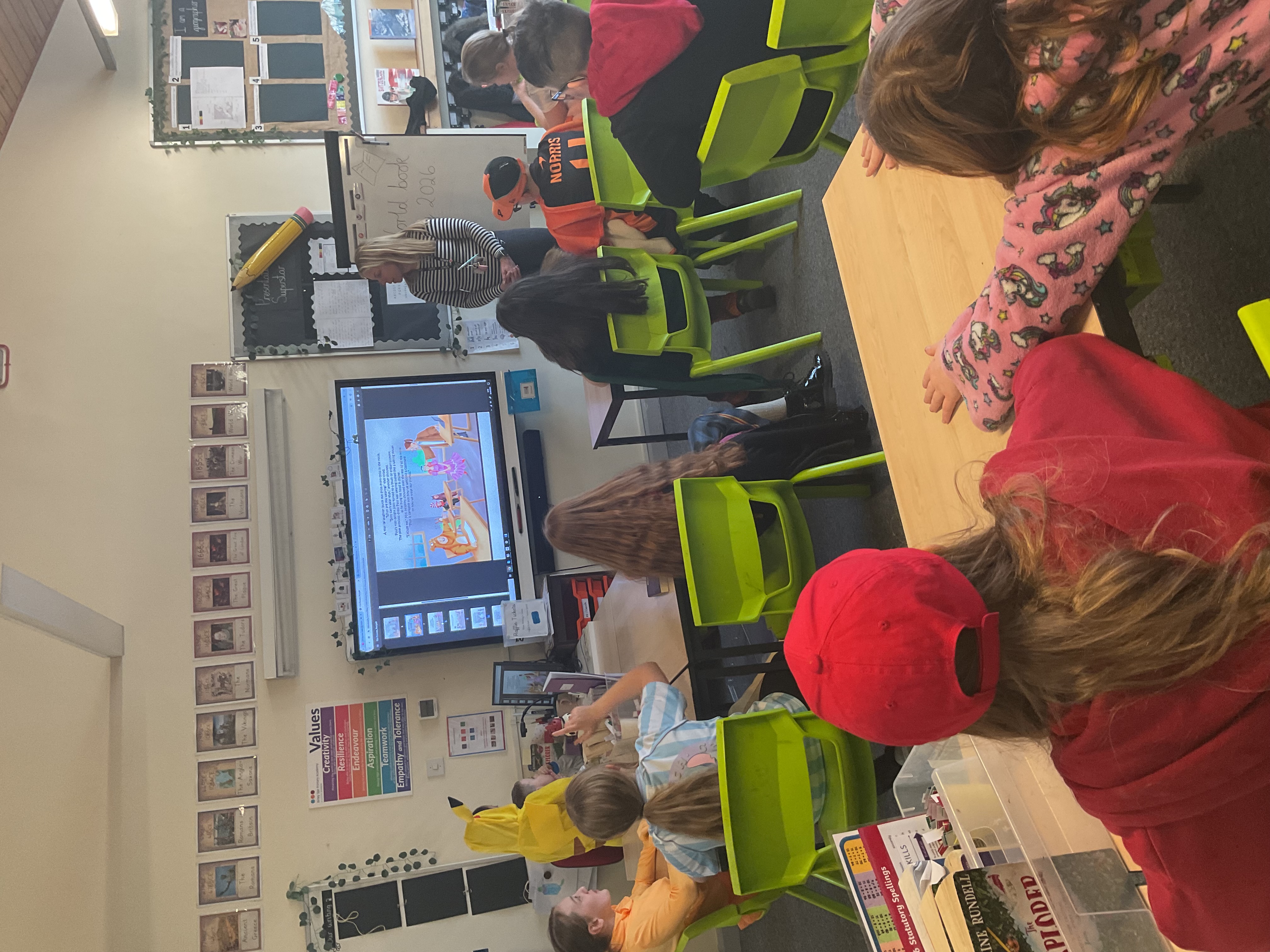
Each year group then focused on a wordless picture book, exploring how images alone can tell powerful stories. Pupils discussed the narrative, retold it in their own words, and created imaginative responses.
Young learners sequenced 4–6 images to rebuild a story and created a class story map using drawings and spoken sentences, demonstrating that storytelling is something everyone can take part in.
Mrs Thomas said: “Wordless books are incredible for early readers because every child becomes a storyteller. Nobody feels left out.”
Children explored problem-solving and used the idea of a magical pen to imagine solutions of their own. They then created their own journey stories in words, images, or speech.
A Year 1 child said, ‘With my magic pen I would draw a door and on the other side of the door would be the beach because it is my favourite place.’
Children became “Inference Detectives”, looking for visual clues, hidden details before creating new scenes that reflected kindness, inclusion and teamwork.
Miss Calvert, who works in Year 3 and 4, said, “I loved the intrigue shown from our pupils when realising a story can still be read without text. They showed creativity using the visuals in the book when recreating their own scenes.”
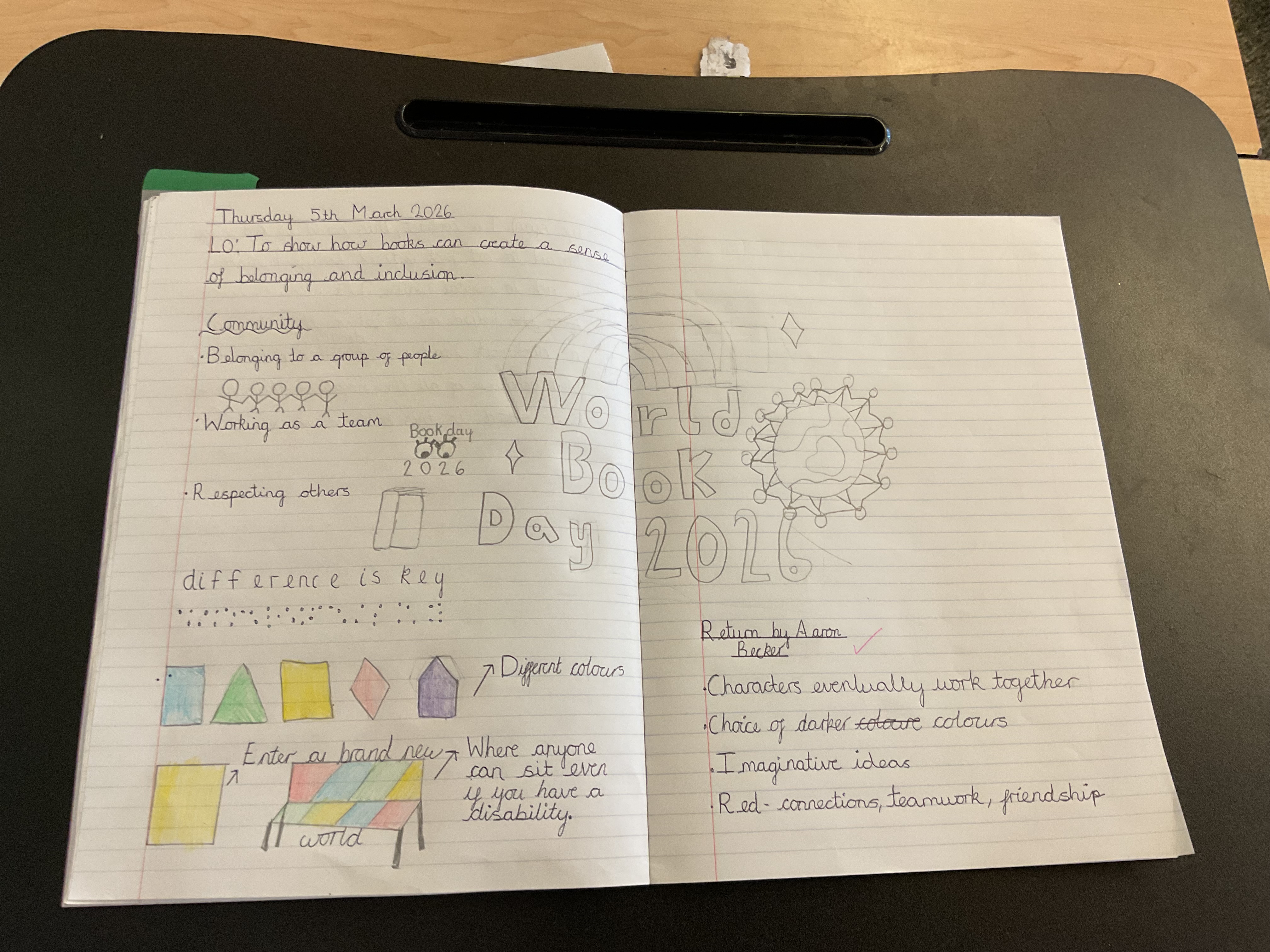
Older pupils examined how belonging and community were represented without text, before designing their own wordless pages imagining an inclusive future. Many incorporated symbolism and even added their own braille titles.
A Year 5 child said, ” It was a really nice way to use our school value of empathy to experience how other people read. I loved seeing how all can be included through reading.”
The day also featured Stop, Drop and Read moments, where the whole school paused to enjoy a book together. Staff contributed short mystery videos of themselves reading with filters, giving pupils a fun challenge—guess the teacher.
The day concluded with the popular Teacher Swap, in which teachers visited different classrooms to share a story, bringing the school community together through reading.
World Book Day at Birley Spa Primary Academy was more than a celebration of books—it was a celebration of inclusion, creativity, and the idea that every child deserves access to stories.
Mrs Gibson summarised the spirit of the day: “We wanted every pupil to feel seen, valued and included through the focus on inclusion and belonging.”